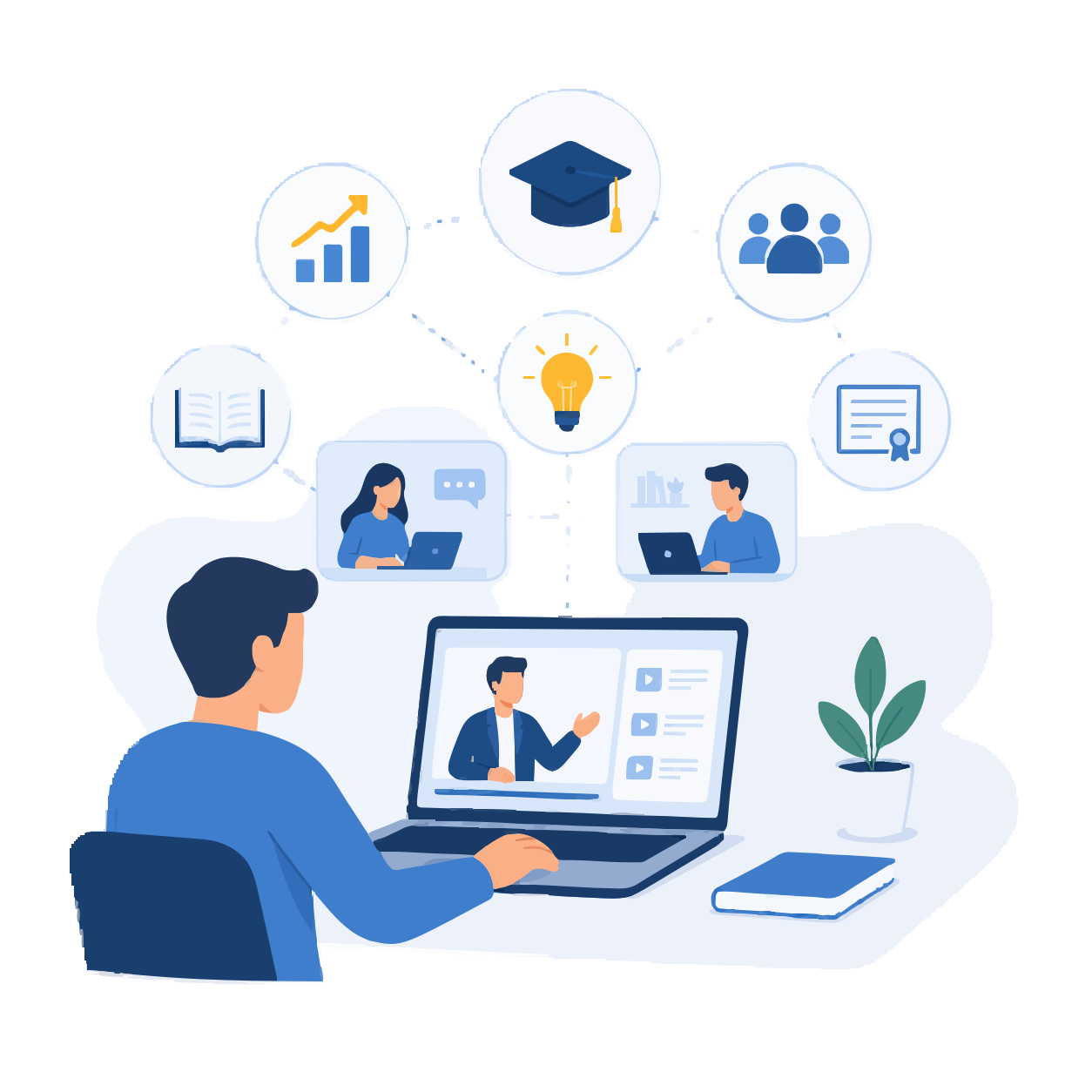
A corporate training program builds employee skills while aligning learning with business goals.
Types of corporate training program include onboarding, compliance, technical, soft skills, leadership, sales, and customer service.
Modern delivery methods like e-learning, microlearning, blended learning, and VR improve flexibility and engagement.
Effective programs start with needs assessment, clear objectives, pilot testing, and ROI measurement.
In today's fast-paced business world, staying ahead means investing in your most valuable asset: your people. But with so many options, choosing the right corporate training program can feel overwhelming. The landscape of professional development has evolved dramatically, with companies recognizing that employee growth directly correlates with business success.
A well-designed corporate training program aligns learning goals with business strategy, ensuring every employee contributes to organizational success.
In this comprehensive guide, we'll break down the various corporate training and development programs, explain their benefits, and guide you on how to implement them effectively for your company.
Whether you're a startup looking to establish your first training initiative or an enterprise seeking to optimize existing programs, this article will provide the insights you need.
What Is a Corporate Training Program?
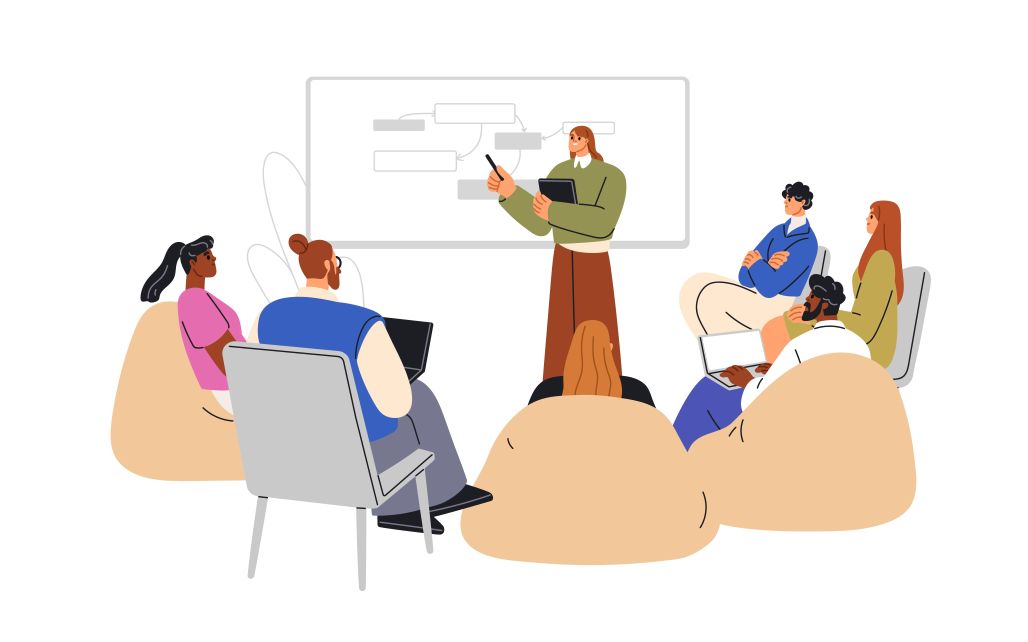
A corporate training program is a structured initiative designed to enhance employees' skills, knowledge, and competencies. These programs focus on areas like leadership, technical expertise, soft skills, and compliance, helping organizations meet objectives by building a skilled, adaptable workforce A corporate training program not only enhances technical skills but also reinforces company values and long-term goals.
Modern corporate training and development programs go beyond traditional classroom settings. They incorporate digital learning platforms, microlearning modules, virtual reality simulations, and peer-to-peer learning networks. This evolution reflects changing workforce expectations and the need for flexible, engaging training experiences.
Why Invest in Corporate Training?
The business case for employee development has never been stronger. Organizations that prioritize training see significant returns on their investment:
Measurable Business Impact
Boost Productivity: Companies with structured training programs see 218% higher income per employee (Devlin Peck).
Enhance Engagement: 92% of employees say well-planned training improves engagement (MyShortlister).
Support Career Growth: 84% of workers feel employers should provide training to help them succeed (Tulane University).
Improve Retention: Organizations with comprehensive training programs have lower turnover rates.
Strategic Advantages
A strong company training program can be the cornerstone of innovation and continuous improvement.
Beyond the numbers, corporate training for companies drives innovation, builds competitive advantage, and creates a learning culture that attracts top talent.
Companies that invest in continuous learning are better positioned to adapt to market changes, technological disruptions, and evolving customer expectations.
For a more detailed guide on corporate training, check out our full article: What is Corporate Training: A Complete Guide
Types of Corporate Training Programs
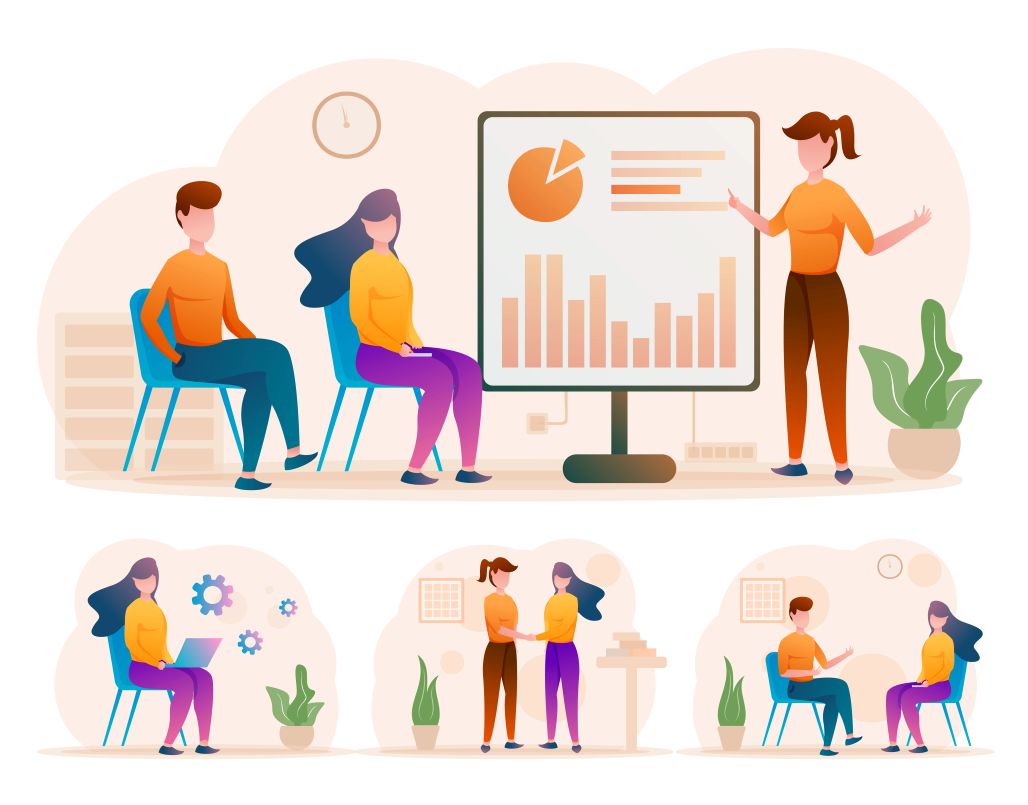
Understanding the different types of training employees can receive helps you build a comprehensive development strategy.
Each corporate training program can be tailored to address specific employee needs, from onboarding to leadership development.
Organizations can choose from several types of training employees to enhance specific skill sets and improve productivity across departments.
Here's a detailed breakdown of the most effective corporate training programs:
1. Orientation and Onboarding Training
First impressions matter, and effective onboarding sets the foundation for long-term success. Modern onboarding programs extend beyond the first week, often spanning several months to ensure complete integration.
Key Components:
Company history, mission, and values alignment
Role-specific responsibilities and expectations
Introduction to team members and key stakeholders
Technology and systems training
Mentorship program assignments
Including a corporate training video during onboarding can make the experience more engaging and consistent across all new hires. Interactive elements like virtual office tours, gamified learning modules, and peer introduction sessions enhance the experience. Calibr's AI-powered personalized learning platform makes employee onboarding streamlined and effective
2. Compliance Training
Compliance training ensures employees understand legal and regulatory requirements, from workplace safety to data protection. This isn't just about avoiding penalties—it's about creating a culture of integrity and responsibility.Every company training program should include compliance as a critical component to mitigate legal and operational risks.
Critical Areas Include:
Workplace harassment prevention
Data privacy and cybersecurity protocols
Industry-specific regulations
Financial compliance and anti-corruption measures
Environmental and safety standards
Failing to implement comprehensive compliance training can lead to significant fines, legal issues, and reputational damage. At Calibr, we provide tailored compliance training programs, including regular updates and refresher courses, to ensure ongoing compliance as regulations evolve
3. Technical Skills Training
Technology evolves rapidly, and so must employee skills. Types of training employees can receive include software proficiency, IT systems, programming languages, and industry-specific technical competencies.
Popular Technical Training Areas:
Cloud computing and cybersecurity
Data analysis and visualization
Digital marketing tools and platforms
Project management software
Industry-specific technologies
Companies like Calibr offer tailored technical programs through AI-powered course authoring tools that empower teams to create custom interactive content without technical expertise.
4. Soft Skills Development
While technical skills get you hired, soft skills help you thrive. These human-centered capabilities—communication, emotional intelligence, teamwork, problem-solving—are essential for workplace success.
Essential Soft Skills Training:
Effective communication and presentation skills
Conflict resolution and negotiation
Time management and productivity optimization
Creative thinking and innovation
Cross-cultural communication and global awareness
Training employees in these areas fosters collaboration, improves workplace culture, and enhances overall organizational effectiveness.
5. Leadership and Management Training
Corporate leadership training programs prepare employees for managerial roles and develop existing leaders. These programs focus on strategic thinking, team management, decision-making, and emotional intelligence.
Leadership Development Components:
Strategic planning and execution
Team building and motivation techniques
Performance management and feedback delivery
Change management and organizational development
Ethical leadership and corporate responsibility
Effective leadership training creates a pipeline of capable managers who can guide teams through challenges and drive business growth.Corporate leadership training programs help organizations identify and nurture emerging leaders, preparing them for future strategic roles.
6. Product Knowledge Training
For organizations with complex products or services, comprehensive product knowledge training is essential. This ensures every team member can confidently represent your offerings and provide valuable customer insights.
Training Elements:
Product features, benefits, and competitive advantages
Use cases and customer success stories
Technical specifications and limitations
Integration capabilities and compatibility
Pricing strategies and value propositions
Well-trained employees become product advocates who can effectively communicate value to customers, increasing satisfaction and loyalty.
7. Sales Training
Sales-focused programs teach negotiation, relationship-building, closing strategies, and customer psychology. These programs are crucial for revenue-generating teams and anyone who interacts with prospects or clients.
Sales Training Components:
Consultative selling techniques
CRM system utilization
Lead qualification and nurturing
Objection handling and negotiation
Account management and expansion strategies
Strong sales training drives revenue growth, improves client retention, and builds long-term customer relationships. Calibr's comprehensive sales training programs help teams master product knowledge and sales techniques
8. Customer Service Training
Exceptional customer service differentiates your brand. Customer service training covers communication skills, conflict resolution, empathy development, and brand representation.
Key Training Areas:
Active listening and communication techniques
Problem-solving and creative solution development
De-escalation strategies for difficult situations
Multi-channel customer support best practices
Customer relationship management
Companies with robust customer service programs report significantly higher satisfaction rates and improved customer lifetime value.
9. Diversity and Inclusion Training
Inclusive workplaces foster innovation, creativity, and engagement. D&I programs address unconscious bias, cultural competence, inclusive leadership, and equitable practices.
D&I Training Focus Areas:
Unconscious bias recognition and mitigation
Cultural competency and global awareness
Inclusive communication and collaboration
Equitable hiring and promotion practices
Creating psychologically safe work environments
Research consistently shows that diverse, inclusive teams outperform homogeneous groups in creativity, problem-solving, and financial performance.
10. Health and Safety Training
Workplace safety and wellness are fundamental responsibilities. This training covers hazard identification, emergency procedures, ergonomics, and wellness practices.
Safety Training Components:
Workplace hazard identification and prevention
Emergency response procedures
Ergonomic best practices
Mental health awareness and support
Wellness program participation
Comprehensive safety training reduces accidents, improves employee wellbeing, and demonstrates organizational commitment to worker welfare.
For more information on combining various training modalities effectively, read our full blog on Blended Learning in Corporate Training: Best Practices
Which Type of Corporate Training Program Should You Choose? (Decision Framework)
Training Program | Choose This When... | Avoid This When... |
|---|---|---|
Orientation & Onboarding Training | You're hiring new employees, expanding teams, or integrating employees after a merger or acquisition. | Employees are already familiar with company policies, systems, and workflows. |
Compliance Training | You need to meet legal, regulatory, or industry requirements such as workplace safety, harassment prevention, or data privacy. | Your objective is to improve job-specific technical or leadership skills rather than regulatory compliance. |
Technical Skills Training | Employees need to learn new software, AI tools, equipment, programming languages, or technical processes. | The challenge is poor communication, leadership, or teamwork rather than technical knowledge. |
Soft Skills Training | You want to improve communication, collaboration, emotional intelligence, customer interactions, or productivity. | Employees lack technical expertise or require certification on specific tools or systems. |
Leadership & Management Training | You're preparing new managers, developing future leaders, or improving decision-making and team performance. | Employees don't have leadership responsibilities or are still developing core job-specific skills. |
Product Knowledge Training | You're launching a new product, updating features, or enabling sales and support teams to represent products confidently. | Employees don't interact with customers or products in their daily responsibilities. |
Sales Training | Sales performance needs improvement, new sales methodologies are being introduced, or new representatives are onboarding. | Teams have little or no responsibility for selling products or services. |
Customer Service Training | Your focus is improving customer satisfaction, complaint handling, communication, or service quality. | Employees work exclusively in internal operational or technical roles with minimal customer interaction. |
Diversity & Inclusion Training | You want to build an inclusive workplace, reduce unconscious bias, strengthen collaboration, or meet DEI initiatives. | Your immediate priority is technical upskilling or regulatory compliance unrelated to workplace inclusion. |
Health & Safety Training | Employees work in environments with physical, operational, or workplace safety risks, or compliance requires safety education. | Employees don't face workplace safety risks and the training objective is unrelated to health or regulatory safety requirements. |
Decision Tip: Organizations rarely rely on a single training program. The most effective corporate training and development programs combine multiple training types based on business goals, employee roles, and skill gaps. For example, a newly promoted sales manager may benefit from onboarding, leadership, product knowledge, sales, and compliance training as part of a structured learning path.
What are the Modern Corporate Training Delivery Methods (2026)
Today's corporate training and development programs go far beyond classroom sessions. Organizations now combine AI-powered learning, mobile-first delivery, and experiential training to create engaging learning experiences that improve knowledge retention and business performance.
The best delivery method depends on your workforce, training objectives, and the complexity of the skills being taught.
Training Method | Best For | Example |
|---|---|---|
Instructor-Led Training (ILT) | Leadership development, executive coaching, workshops | Manager leadership bootcamp |
E-Learning | Compliance, onboarding, product knowledge | Annual cybersecurity training |
Blended Learning | Technical certifications and skill development | Online modules followed by instructor-led workshops |
Microlearning | Busy employees requiring quick learning | Five-minute product update videos |
Virtual Instructor-Led Training (VILT) | Remote and hybrid teams | Live Zoom training with interactive polls |
Simulation & Scenario-Based Learning | Customer service, sales, compliance | Practice handling customer complaints |
Virtual Reality (VR) & Augmented Reality (AR) | Manufacturing, healthcare, safety | Emergency response simulation |
AI-Powered Personalized Learning | Continuous employee development | LMS recommends courses based on skill gaps |
Social & Collaborative Learning | Knowledge sharing | Discussion forums, peer mentoring, communities |
Best Practice: High-performing organizations rarely rely on a single delivery method. Combining classroom learning, digital modules, microlearning, and AI-driven recommendations creates a more engaging and effective learning experience.
Deliver Corporate Training Programs Through an LMS
Organizations can deliver every type of corporate training program—from onboarding and compliance to leadership and technical skills—through a modern Learning Management System (LMS). Instead of managing multiple tools and manual processes, an LMS centralizes learning, making it easier to create, deliver, track, and continuously improve training at scale.
A modern LMS enables organizations to:
Deliver personalized learning paths for different roles and departments.
Support instructor-led, online, blended, and microlearning experiences.
Automate enrollments, reminders, certifications, and compliance tracking.
Monitor learner progress with real-time analytics and reporting.
Improve engagement through gamification, AI-powered recommendations, and interactive content.
Enable employees to learn anytime, anywhere, on any device.
Calibr's Comprehensive Training Solutions
At Calibr , we provide all types of corporate training programs mentioned above through our innovative three-pillar approach that transforms how organizations develop their workforce.
Calibr Content Hub - Our centralized learning resource library features expertly curated materials developed by subject matter experts
Calibr Craft - Our content creation and management suite enables custom program development with instructional design collaboration
Calibr Learn - Our AI-powered personalized learning platform combines cutting-edge technology with proven pedagogical principles
Our platform offers many advanced features—including gamification, microlearning, AI-powered course authoring, personalized learning paths, real-time analytics, and collaborative learning. To discover more, visit our website.
By implementing the right types of training employees, companies can ensure continuous professional growth and long-term business impact
Transform your workforce today - Contact Calibr to design a custom training program that delivers measurable business results.
Corporate Training Methods to Evaluate Learning Effectiveness

Measuring the success of a corporate training program goes beyond tracking course completions. Modern organizations use data-driven corporate training methods to evaluate knowledge retention, employee performance, business outcomes, and return on investment (ROI).
By combining learning analytics with performance metrics, organizations can continuously improve their training strategy and maximize business impact.
Kirkpatrick's Four-Level Model
The Kirkpatrick Model provides a framework for assessing training effectiveness at four levels
Reaction: How participants respond to training
Learning: Knowledge and skill acquisition
Behavior: Application of learning in the workplace
Results: Business impact and ROI
2. ROI (Return on Training Investment)
Training should create measurable business value. ROI analysis compares training costs with organizational outcomes to determine whether learning initiatives deliver a positive financial return.
Evaluate:
Productivity improvements
Revenue growth
Reduced employee turnover
Lower compliance costs
Operational efficiency
3. Learning Analytics and LMS Reporting
Modern LMS platforms provide real-time analytics that help organizations monitor learner progress and identify skill gaps.
Track metrics such as:
Course completion rates
Assessment scores
Learning engagement
Time to competency
Certification status
Skill progression
4. Skills and Competency Assessments
Knowledge alone isn't enough. Organizations should evaluate whether employees can successfully apply new skills in real workplace scenarios.
Assessment methods include:
Practical assignments
Scenario-based exercises
Simulations
Role-specific evaluations
Manager observations
5. Business Performance Metrics
The ultimate measure of training success is its impact on business performance. Organizations should regularly compare workforce performance before and after training.
Monitor:
Employee productivity
Customer satisfaction
Employee retention
Sales performance
Compliance rates
Workplace safety incident
Future Trends in Corporate Training
The future of corporate training and development programs is shifting from one-time courses to continuous, skills-based learning.
Organizations are increasingly using AI to identify skill gaps, recommend personalized learning paths, and measure workforce readiness in real time.
Rather than replacing instructor-led training, technologies like microlearning, immersive simulations (VR/AR), and AI-powered coaching are enhancing learning by making it more relevant, engaging, and accessible.
To stay competitive, organizations should focus on building a learning ecosystem—not just delivering courses.
This means regularly updating training content, using data to refine learning strategies, aligning programs with evolving business goals, and investing in an LMS/LXP that supports personalized learning, analytics, and continuous upskilling.
Companies that adapt early will be better positioned to respond to changing technologies, workforce expectations, and future skill demands.
Frequently Asked Questions (FAQs)
What is a corporate training program?
A corporate training program is a structured learning initiative that helps employees develop the skills, knowledge, and competencies needed to improve performance and achieve organizational goals. These programs can cover onboarding, compliance, technical skills, leadership, sales, and more.
What are the different types of corporate training programs?
The most common types of corporate training programs include onboarding, compliance, technical skills, soft skills, leadership and management, product knowledge, sales, customer service, diversity and inclusion, and health and safety training. Organizations often combine multiple programs based on their business objectives.
How do I choose the right corporate training program?
Choose a corporate training program based on your organization's goals, employee roles, skill gaps, and compliance requirements. Conducting a training needs assessment helps identify the most effective program for your workforce.
How are modern corporate training and development programs delivered?
Modern corporate training and development programs are delivered through instructor-led training, e-learning, blended learning, microlearning, virtual instructor-led training (VILT), simulations, virtual reality (VR), and AI-powered Learning Management Systems (LMS).
Why should organizations use an LMS for corporate training?
An LMS centralizes learning by helping organizations create, deliver, track, and measure corporate training and development programs. It also supports personalized learning, automated compliance tracking, mobile learning, and real-time reporting.
How can organizations measure the effectiveness of a corporate training program?
Organizations can evaluate a corporate training program using learner feedback, assessment scores, skill improvements, business KPIs, productivity metrics, employee engagement, and Return on Training Investment (ROI).
How often should corporate training programs be updated?
Corporate training and development programs should be reviewed regularly and updated whenever business objectives, technologies, regulations, products, or employee skill requirements change. Many organizations also conduct annual content reviews to keep training relevant.
What makes a successful corporate training program?
A successful corporate training program aligns with business goals, addresses employee skill gaps, uses engaging delivery methods, leverages an LMS for scalability, and continuously measures and improves learning outcomes through analytics and feedback.
Conclusion
Implementing a comprehensive corporate training program isn't just about developing skills—it's about building a culture of continuous learning, growth, and innovation. By choosing the right type of corporate training program, you empower your employees, improve retention, and position your organization for long-term success.
The most successful companies view training as a strategic investment rather than a cost center. Well-structured corporate training and development programs drive consistent employee growth and help organizations stay competitive. A well-designed corporate training for companies creates competitive advantages, drives innovation, and builds resilient, adaptable teams capable of thriving in any market condition.
Whether you're implementing your first training program or enhancing existing initiatives, remember that the best programs are those tailored to your specific organizational needs and delivered through engaging, measurable formats.
Ready to elevate your training strategy? Schedule a consultation with Calibr's experts today and discover how our AI-powered solutions can transform your workforce development initiatives
Additional External Resources
For deeper insights into corporate training effectiveness and industry trends:


Vivetha is a digital marketing professional specializing in content marketing and SEO. She focuses on developing optimized, high-quality content that improves search visibility, supports brand objectives, and drives measurable results. With a structured and analytical approach, she ensures content aligns with business and audience needs.