CHRO Sexual Harassment Prevention Training: Complete Connecticut Guide (2026)


Connecticut expanded sexual harassment training after complaints reached a record high.
CHRO reported more than 260 complaints in 2019, its highest total.
The law now requires employers with more than three employees to provide training.
The mandate aims to address harassment affecting workers across roles, titles, and professions.
In Connecticut, sexual harassment is pervasive. In an interview published by NBCC, Tanya Hughes, executive director of the Commission on Human Rights and Opportunities, said, “Sexual harassment is a problem that permeates across society. Across all jobs, across all titles, across all professions.”
Her observation is not wrong, with statistics conveying something similar. In 2019, the Connecticut Commission on Human Rights and Opportunities (CHRO) reported a record high of over 260 sexual harassment complaints. It represents the highest number in the agency's nearly 80-year history.
This created the need for a strong government response, which came by passing a legislature that required the provision of sexual harassment training to the employees of an organization. Popularly known as, CHRO sexual harassment training, it is now mandatory for employers with more than 3 employees to compulsorily organize these training sessions. Let’s study and understand all the key provisions in detail.
What Constitutes Sexual Harassment in Connecticut?
In Connecticut, sexual harassment is illegal under:
The Connecticut Discriminatory Employment Practices Act (C.G.S. § 46a-60(a)(8))
Title VII of the Civil Rights Act of 1964
This law comprehensively defines sexual harassment in the workplace, which includes a range of behaviors and circumstances.
Sexual harassment may include:
Unwelcome sexual advances
Requests for sexual favors
Verbal, physical, or visual conduct of a sexual nature
Sexual comments, jokes, gestures, or inappropriate messages
Displaying offensive or sexually explicit material
Making employment decisions based on acceptance or rejection of sexual conduct
Sexual harassment becomes unlawful when:
Submission to the conduct is made a condition of employment.
Acceptance or rejection of the conduct influences hiring, promotion, pay, assignments, or termination.
The behavior creates an intimidating, hostile, or offensive work environment.
The conduct unreasonably interferes with an employee's ability to perform their job.
Connecticut law protects employees from harassment by supervisors, co-workers, clients, customers, vendors, or any individual in the workplace.
Employers are expected to take prompt action to prevent, investigate, and address complaints of sexual harassment.
What is CHRO sexual harassment training?
The CHRO sexual harassment training is a mandatory workplace education program in Connecticut designed to prevent sexual harassment.
Among the various CHRO training programs, this program is specifically focused on helping employers comply with state law while creating safer workplaces.
What is the purpose of CHRO sexual harassment training?
The training is specifically designed to educate employees about:
The legal definitions of sexual harassment and its various forms
The rights and responsibilities of both employees and employers
The procedures for reporting and addressing incidents of harassment
Techniques for maintaining a respectful and safe work environment
Additionally, this training ensures that organizations comply with Connecticut’s legal requirements regarding sexual harassment prevention. Failure to provide this training usually results in legal consequences for employers.
Which employers are required to deliver the CHRO sexual harassment training?
It is pertinent to note that the applicability and rules related to the delivery of CHRO sexual harassment training vary with the number and nature of employees working in an organization. Let’s understand the different requirements:
Employers with 3 or more employees
These employers must provide two hours of sexual harassment prevention training to all employees
New employees must receive this training within six months of their start date
Employers with fewer than 3 employees
These employers must ensure that all supervisory employees receive two hours of sexual harassment prevention training.
New supervisory employees must complete this training within six months of their start date.
Out-of-State Employers
Employers based outside of Connecticut (having employees working in Connecticut) must also comply with these training requirements for their Connecticut-based employees.
Check out the blogs on AB 1825 and California SB 1343 to learn more about other types of sexual harassment training.
What is the content and format of the CHRO training?
The training involves watching educational videos that cover various aspects of sexual harassment. To effectively cover all the content, the training must include:
Examples
Case studies and
Best practices for prevention
Also, to make it more interactive and reinforce learning, “interactive quizzes” should be included in the CHRO sexual harassment prevention training. These quizzes ensure that employees comprehend the material and can apply it in real-life situations.
Employers may choose to develop their own CHRO training programs, provided the content meets Connecticut's legal requirements for CHRO sexual harassment prevention training.
Can employers use their training programs instead of the CHRO video?
Yes, employers in Connecticut have the flexibility to even use their own training programs to comply with the set requirements. For the unaware, The Connecticut Commission on Human Rights and Opportunities (CHRO) offers a free online training video that satisfies the state's sexual harassment prevention training requirements. This is an easy option for employers to ensure compliance.
However, employers are not obligated to use the CHRO’s training program. They can create or use their own training programs. But this program must meet the state's specified content requirements and cover at least the following elements:
Element I: Definition of Sexual Harassment as Set Forth in Connecticut Law
Sexual harassment is defined under Connecticut law as any of the following:
Unwelcome sexual advances
Requests for sexual favors and
Other verbal or physical conduct of a sexual nature
This element is already covered in detail in the above section, “What Constitutes Sexual Harassment in Connecticut?”
Element II: Explanation of the Illegality of Sexual Harassment
Sexual harassment is prohibited by both federal and state laws.
Federal Law
Under Title VII of the Civil Rights Act of 1964, sexual harassment is considered a form of sex discrimination.
It is illegal in any workplace with 15 or more employees.
State Law
Connecticut law under the Connecticut Fair Employment Practices Act (CFEPA) also prohibits sexual harassment
It provides protections for employees in workplaces with three or more employees.
Employers are legally required to prevent and address sexual harassment in the workplace. Failure to do so results in legal consequences, including fines, penalties, and lawsuits.
Element III: Information on the Remedies Available to Victims of Sexual Harassment
Victims of sexual harassment have several remedies available to them, such as:
Internal Reporting
Employees can report incidents of harassment to their employer
In usual circumstances, the reporting should be through human resources or designated channels within the company.
Filing a Complaint
Victims can file a complaint with the Connecticut Commission on Human Rights and Opportunities (CHRO).
The CHRO investigates claims of discrimination and harassment
After the completion of the investigation, it can take action against employers who violate the law.
Legal Action
Employees also have the option to file a lawsuit in state or federal court.
Remedies in these cases commonly include:
Reinstatement to their job if they were terminated.
Compensation for lost wages and benefits.
Damages for emotional distress and other harm suffered.
Punitive damages in cases of particularly egregious conduct.
Attorney’s fees and court costs.
In addition to the elements mentioned above, CHRO also provides certain additional guidelines:
Regular Updates and Refresher Courses
The training may be updated periodically to reflect changes in:
Laws
Emerging issues, and
Best practices
Also, employers are encouraged to provide refresher courses to keep employees up-to-date
Customization for Specific Industries
Depending on the workplace environment, the training should be tailored to address:
Specific challenges and
Scenarios relevant to different industries
This ensures that the training is relevant and effective
Confidentiality and Support Systems
The training should also cover the “importance of maintaining confidentiality” in harassment cases
It should provide information on support systems available to victims, such as:
Counseling services
Legal assistance
What are the different training modes for different roles?
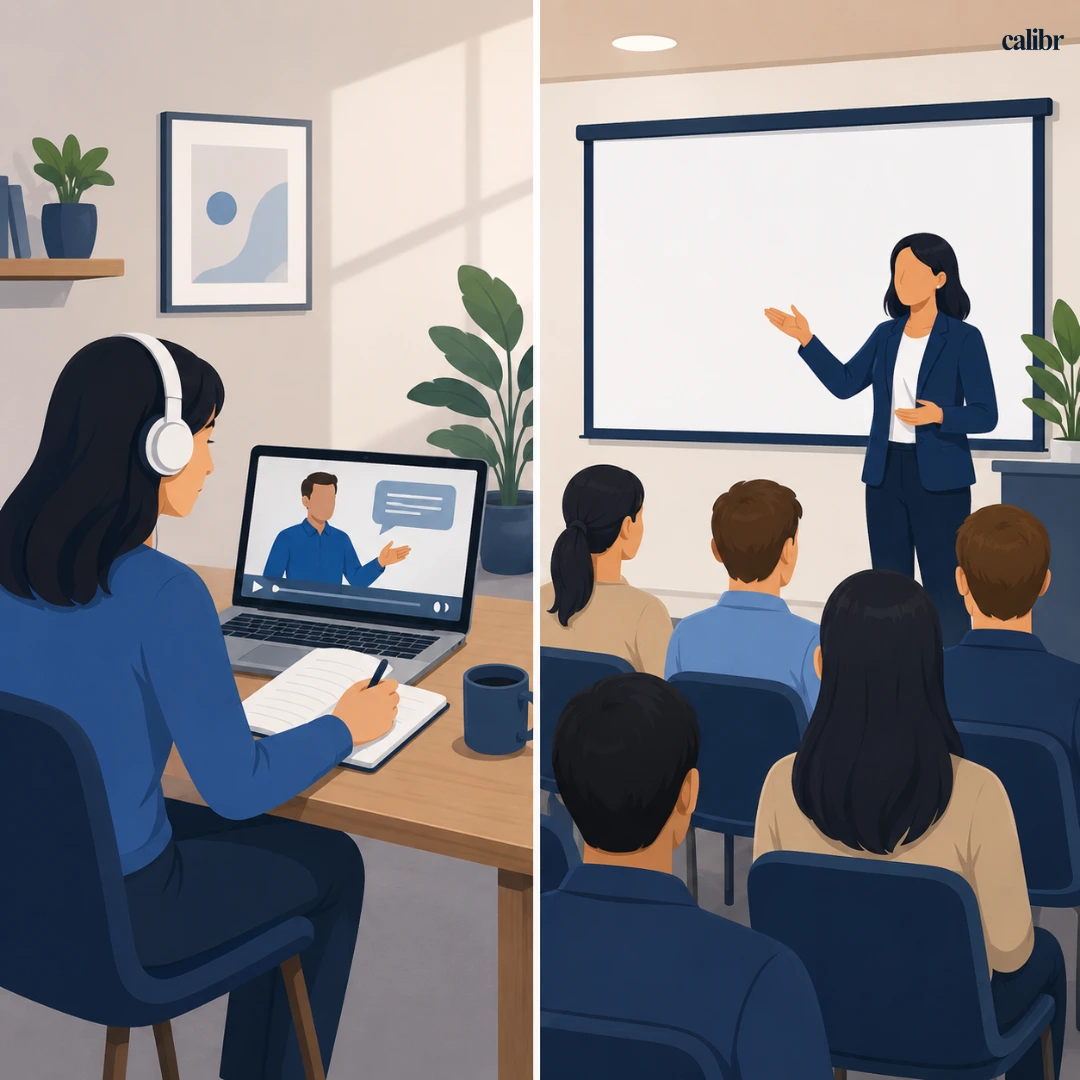
The CHRO states that sexual harassment prevention training can be provided in two different modes:
Online Training
and
In-person Training
The selection of mode depends on the designation or class of employees undertaking the training. Let’s study in detail:
Online Training for Non-Supervisory Employees
Non-supervisory employees can complete the training online
This format is convenient and accessible
It allows employees to complete it at their own pace and according to their schedules
In-Person Training for Supervisory Employees
While online training is available, in-person training is highly recommended for supervisory employees
Supervisors play a crucial role in:
Enforcing workplace policies
Addressing harassment complaints
Additionally, in-person training allows for:
More interactive and detailed discussions
Role-playing scenarios
Direct Q&A sessions with trainers
This mode of training better prepares supervisors to handle sensitive situations effectively.
What is a CHRO training certificate?
The CHRO training certificate is a formal document. It is provided by the Connecticut Commission on Human Rights and Opportunities (CHRO) to individuals who complete the CHRO's Sexual Harassment Prevention Training program. As discussed above, this training is mandated for all employees in Connecticut to educate them on recognizing and preventing sexual harassment in the workplace.
Let’s see certain key points related to the CHRO training certificate:
Purpose
The certificate serves as proof that an individual has completed the required two hours of sexual harassment prevention training.
It ensures that both employees and employers comply with Connecticut state law.
Completion Requirements
To obtain the certificate, individuals must:
Complete the entire two-hour training program provided by the CHRO
Engage with the training content, which includes:
Watching videos
Taking quizzes to reinforce understanding
Certification Process
After finishing the training, individuals can request the certificate using the CHRO Training Certificate Request Form.
The certificate is usually issued every other business day.
If there are any issues or delays in receiving the certificate, individuals can contact the CHRO at CHRO.Questions@ct.gov.
How can you obtain the CHRO training certificate?
Obtaining a CHRO sexual harassment training certificate is a straightforward process. For your easy understanding, we have prepared the following step-by-step guide:
Step I: Access the Training Portal
Go to the provided URL: https://www.goto.com/training
Step II: Register for the Training
Enter your First Name, Last Name, and E-mail Address in the appropriate fields.
Click the “Register” button to proceed.
Step III: Review the Initial Video
After registering, an introductory video will appear on the screen
Watch this video and then scroll down past it.
Step IV: Access Training Materials
Click on the “Materials” tab, which you will find on the training page.
Step V: Watch Section 1 Video
Under the “Materials” tab, locate and click the “View” button
This button is located next to the “Section 1: Sexual Harassment at Work training Video.”
Click on it to open the video in a new tab in your browser.
Step VI: Return to the Previous Tab for Quiz 1
After watching the entire Section 1 video, return to the original training tab
Here, you can access Quiz 1.
Step VII: Complete Quiz 1
Go to the “Tests” tab
Find and complete Quiz 1 related to the Section 1 video
Step VIII: Watch All Sections and Complete All Quizzes
Similarly, you will be required to:
Watch all six training sections
Complete the corresponding quizzes
Be aware that the sections and quizzes might not be listed in sequential order. So make sure to complete each one.
Step IX: Request Completion Certificate
After finishing all sections and quizzes, go back to the “Materials” tab
Find the CHRO Sexual Harassment Prevention Training Certificate Request Form.
Step X: Submit the Request Form
Complete steps 1–4 of the “request form.”
Click the “Submit” button
This form is necessary to obtain your completion certificate.
Upon successful submission, you will receive a completion certificate from the CHRO via email (usually it takes a business day)
Need all the steps? Download them in PDF form here.
What are some certain visual aids you will encounter?
Registration Screen – Enter your personal information and click "Register."
Introductory Video – Watch the introductory video after registration.
Materials Tab – Access training videos and the certificate request form.
Training Videos – Click "View" to watch each training section.
Tests Tab – Complete the quiz after finishing each video.
Certificate Request Form – Fill out and submit the form to receive your training certificate.
What are the consequences of non-compliance with the CHRO training requirements?
As a legal requirement, employers in Connecticut must comply with the CHRO sexual harassment prevention training requirements. The CHRO has the authority to inspect an employer's place of business to ensure compliance with the requirements.
Employers must understand that inspections can occur.
If the CHRO executive director reasonably believes that there is a violation,
or
Within 12 months after a complaint has been filed
Also, non-compliance leads to several serious consequences. Let’s have a look at some major ones:
Fines for Failing to Provide Mandatory Training
Employers who do not provide the required two-hour sexual harassment prevention training to employees may face fines of up to $1,000 per violation
Fines for Failing to Post Required Information
Employers must post and distribute information about the illegality of sexual harassment and the remedies available.
Failure to do so can also result in fines of up to $1,000.
This requirement ensures that all employees are aware of their rights and the resources available to them.
Does CHRO protect an employee who has filed a complaint against their employer?
Yes, CHRO places certain restrictions on employers against whom a valid sexual harassment complaint has been filed. See how:
Suppose an employee files a complaint of sexual harassment
In that case, the employer cannot alter the employee's terms and conditions of employment (such as work location or schedule) without the employee's written consent.
This rule protects employees from:
Potential retaliation
or
Further harassment after they have made a complaint
What’s the time limit to file complaints?
Employees now have 300 days to file a charge of discriminatory practice with the CHRO, up from the previous 180 days. This extended window gives employees more time to report incidents of sexual harassment.
Frequently Asked Questions (FAQs)
Is CHRO sexual harassment prevention training mandatory in Connecticut?
Yes. Connecticut requires employers with three or more employees to provide CHRO sexual harassment prevention training to all employees. Employers with fewer than three employees must train all supervisory employees.
Who must complete CHRO sexual harassment prevention training?
All employees working for Connecticut employers with three or more employees must complete the training. New employees should receive the training within six months of their hire date.
Can employers use their own CHRO training programs?
Yes. Employers may use their own CHRO training programs instead of the state's free training, provided the program meets Connecticut's legal content and interactivity requirements.
How long is CHRO sexual harassment prevention training?
The training must be at least two hours long and include interactive learning, such as videos, quizzes, or real-world workplace scenarios.
How often is CHRO sexual harassment prevention training required?
After the initial training, Connecticut requires employers to provide supplemental training at least once every 10 years. Many employers choose to refresh training more frequently as a best practice.
Is there a free CHRO sexual harassment prevention training course?
Yes. The Connecticut Commission on Human Rights and Opportunities (CHRO) offers a free online CHRO sexual harassment prevention training course that satisfies the state's minimum legal requirements.
What topics are covered in CHRO training programs?
Most CHRO training programs cover the legal definition of sexual harassment, prohibited conduct, reporting procedures, retaliation protections, employer responsibilities, and remedies available to victims.
What happens if an employer does not comply with CHRO training requirements?
Employers that fail to meet Connecticut's sexual harassment training requirements may face investigations, monetary penalties, and other legal consequences under state law.
Final Thoughts
CHRO sexual harassment prevention training is essential for helping Connecticut employers meet legal requirements and build a safe, respectful workplace.
Whether organizations use the state's resources or their own CHRO training programs, they must ensure the training complies with Connecticut law. Investing in effective CHRO sexual harassment prevention training not only reduces legal risks but also promotes a culture of respect and accountability.


Sanju has a wealth of experience and expertise in instructional design, bringing innovative ideas and a fresh perspective to e-learning content development. She is passionate about merging technology and creativity for dynamic e-learning. Her passion for creating engaging and effective learning experiences aligns perfectly with Calibr's commitment to excellence. She also enjoys writing about e-learning trends in the corporate world.